How to choose a no-pull harness for a dog that pulls
Front clip or back clip? How no-pull harnesses work, how to fit one properly, what the gait research says, and why training still matters.
By Petaholics Team · Dogs · · 5 min read
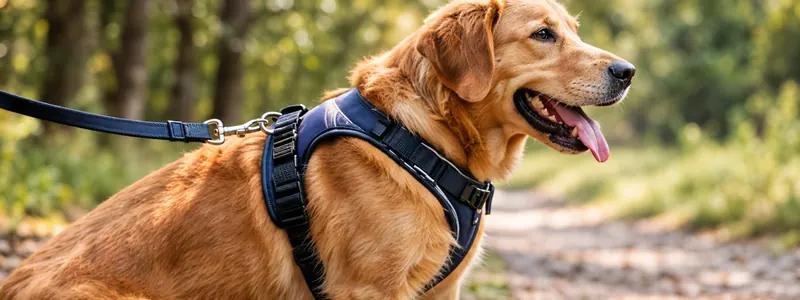
Quick answer: for a dog that pulls, look for a harness with a front clip on the chest, a Y-shaped chest strap that sits clear of the shoulders, and adjustment points on both the neck and the chest. A front clip gently turns your dog towards you when they pull. A harness makes walks safer and more comfortable, but it is a management tool: lasting change comes from teaching loose-lead walking.
This guide explains how the different harness styles work, how to fit one, what research says about harnesses and movement, and how to use the harness while you train.
Why dogs pull on the lead
Dogs pull because it works: pulling gets them to the interesting smell or the park faster. Many dogs also simply walk faster than people do. A harness can reduce how much pulling pays off, but it won't change the habit on its own.
Front clip, back clip or dual clip?
The American Kennel Club and PetMD both describe the same basic difference:
- Front-clip harness. The lead attaches at the centre of the chest. When your dog pulls, the harness turns them sideways, back towards you, which takes the power out of the pull. This is what most "no-pull" harnesses are.
- Back-clip harness. The lead attaches between the shoulder blades. It's comfortable and easy to put on, and great for dogs who already walk nicely, but strong pullers can lean into it like a sled dog.
- Dual-clip harness. Has both. You can use the front clip while training, then move to the back clip as your dog's walking improves. Some owners use a double-ended lead attached to both.
For most dogs that pull, a dual-clip harness is the most flexible choice.
Y-front or straight-across chest strap?
Harnesses come in two broad shapes at the front:
- Y-front harnesses have straps that form a "Y" over the breastbone, leaving the shoulders free.
- Straight-across (sometimes called "restrictive") harnesses have a horizontal strap across the front of the chest and shoulders.
Researchers have studied whether the shape affects how dogs move. In a small study published in Veterinary Record in 2019 (Schmalz and colleagues, nine dogs), both harness types reduced how far the shoulder extended compared with walking without a harness, and the non-restrictive design reduced it slightly less (study summary). A 2021 review in Frontiers in Veterinary Science described the overall evidence as inconclusive (review).
In practice: no harness has been proven harmful, and none has been proven to have no effect on movement. A well-fitted Y-front design that leaves the shoulders free is a sensible default, especially for active dogs.
How to measure your dog
Measure before you buy, because sizes vary between brands. You'll need a soft tape measure.
- Chest girth: around the widest part of the ribcage, just behind the front legs.
- Neck: around the base of the neck, where a collar would sit low.
- Weight: many brands use it as a guide between sizes.
If your dog falls between two sizes, check which straps adjust on each, and choose the size where both measurements sit near the middle of the range.
How to fit a no-pull harness
A harness that is too loose lets the front clip swing to the side, and a dog can back out of it. One that is too tight rubs. Check each of these:
- Two-finger check: you should be able to slide two fingers flat under every strap, but not much more.
- Chest ring position: the front ring should sit in the centre of the chest, on the breastbone, not low near the front legs.
- Shoulders free: the straps shouldn't sit across the point of the shoulder or press into it as your dog walks.
- Armpits: the strap behind the front legs should sit clear of the armpits so it doesn't rub.
- Escape test: gently pull backwards and upwards on the harness. It shouldn't slide over your dog's head.
Recheck the fit after a few walks, as straps can loosen. Look for redness or hair loss where straps sit.
Tips for small and short-legged dogs
Small dogs, and short-legged breeds such as dachshunds and corgis, can trip over a lead that hangs from a front clip. A lighter lead, or a dual-clip harness used on the back clip with a short lead, can help. Pay extra attention to the strap behind the front legs on deep-chested dogs.
A harness is a tool, not training
A no-pull harness reduces pulling while you work on the habit. To make the change last:
- Reward the position you want. Treat often when your dog is walking beside you with a loose lead.
- Stop when the lead goes tight. Stand still until the lead loosens, then carry on. Your dog learns that pulling stops the walk.
- Practise somewhere boring first. Start in the garden or a quiet street before busy parks.
- Change one thing at a time. As your dog improves, switch from the front clip to the back clip.
If your dog lunges at other dogs, people or traffic, or the pulling is getting worse, a qualified, reward-based trainer or behaviourist can help.
Frequently asked questions
Do no-pull harnesses really work?
They reduce pulling for many dogs by turning them when they pull, but they don't teach a dog to walk nicely. Most owners see the best results when they combine the harness with loose-lead training.
Are no-pull harnesses bad for dogs?
The research so far is limited and inconclusive. A well-fitted harness that leaves the shoulders free is a sensible choice. Avoid any harness that tightens or squeezes as a correction.
Is a harness better than a collar for a dog that pulls?
A harness spreads pressure across the chest instead of the throat, so it is usually the more comfortable option for a dog that pulls. Keep a flat collar on for ID tags.
What is the best harness for dogs that pull?
There isn't one best harness for every dog. The best one for your dog is a well-fitted front-clip or dual-clip harness with a Y-shaped front, sized from your dog's own measurements.
This article is general guidance. Petaholics has not tested specific harness brands for this guide.