Why does my cat knead? 5 reasons cats "make biscuits"
Kneading, or making biscuits, is usually a sign of comfort. Here's why cats knead people and blankets, why some drool, and when to check with a vet.
By Petaholics Team · Cats · · 4 min read
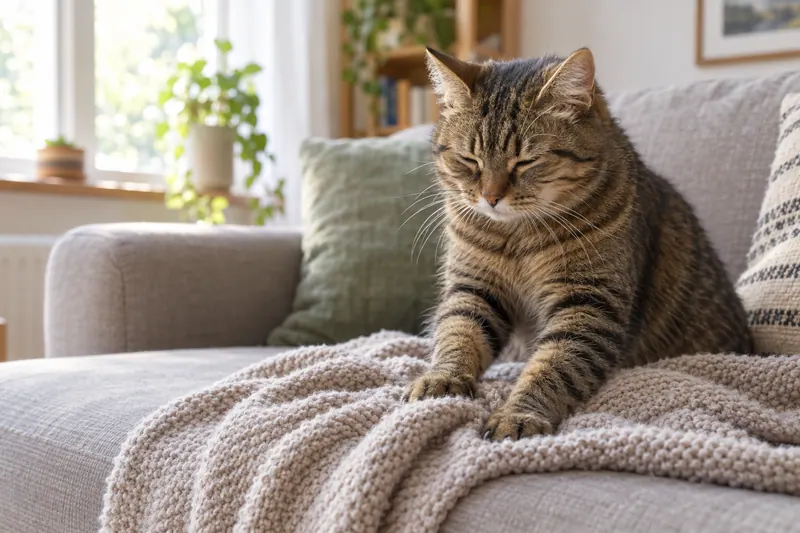
Quick answer: kneading, the rhythmic pushing of the front paws that owners call "making biscuits", is usually a sign that a cat feels relaxed and content. The most widely accepted explanation is that it starts in kittenhood, when kittens knead their mother to help milk flow. Adult cats also knead to settle a sleeping spot, to stretch, and possibly to leave scent. Scientists haven't settled on a single cause, so these are best understood as likely reasons rather than proven facts.
What kneading looks like
A kneading cat presses down with one front paw, then the other, in a slow rhythm, often on something soft such as a blanket, a cushion or your lap. Many cats purr while they knead, half-close their eyes, and some flex their claws in and out. A few drool.
1. It starts in kittenhood
Newborn kittens knead their mother's belly while nursing, which helps stimulate milk flow. Vets at VCA Animal Hospitals and PetMD both describe adult kneading as most likely a carry-over from this comforting early behaviour. That's why kneading so often appears when a cat is warm, safe and settling down.
2. Comfort and contentment
Most adult kneading happens when a cat is relaxed: curling up on a soft blanket, being stroked, or settling on a person they trust. If your cat kneads you while purring, it's generally a good sign about how they feel in that moment.
3. Making a bed
Wild ancestors of domestic cats may have trampled grass or leaves to make a comfortable, safe place to rest. Some cats knead and circle before lying down, which fits this idea of preparing a sleeping spot.
4. Stretching
Kneading flexes the muscles in the legs, paws and shoulders. Some cats knead after waking up, much as they stretch.
5. Leaving their scent (possibly)
Cats have scent glands between their toe pads, and one theory is that kneading leaves a scent that marks a place or person as familiar. This explanation is often repeated but less certain than the others, so treat it as a possibility.
Why does my cat drool or purr while kneading?
Purring and drooling while kneading are usually part of the same relaxed state, and they also echo nursing as a kitten. Drooling on its own, or with bad breath, pawing at the mouth or eating difficulties, can be a sign of dental or mouth problems and is worth a vet check.
Why does my cat knead and then bite?
Some cats become overstimulated after a while, even during something they were enjoying. Watch for a twitching or thumping tail, flattened ears, skin rippling along the back or a sudden stillness. Those signals mean it's time to stop stroking and let your cat move away.
Why does my cat knead me but not other people?
There's no research that answers this directly. A reasonable explanation is that cats knead where they feel most relaxed and secure, so a cat that kneads you is choosing you as a comfortable, trusted spot.
How to make kneading more comfortable
Kneading is normal behaviour, so the aim is to make it painless rather than to stop it:
- Keep a blanket handy. Put a thick throw on your lap when your cat settles in.
- Trim the tips of the claws regularly, or ask your vet or groomer to show you how.
- Gently redirect. If kneading hurts, lift your cat onto a soft blanket beside you rather than pushing them away.
- Provide scratching posts so claws stay in good condition.
Never punish a cat for kneading. And declawing is not a solution: it's a surgical amputation that veterinary organisations strongly discourage, and it's illegal in many countries.
When to talk to your vet
Kneading by itself is rarely a concern. Speak to your vet if kneading suddenly becomes very frequent or obsessive, appears with other changes such as hiding, changes in appetite or litter habits, or comes with drooling and mouth discomfort.
Frequently asked questions
Is kneading a sign of affection?
Often, yes. Cats usually knead when they're relaxed and with people they trust, so kneading you is generally a positive sign.
Do all cats knead?
No. Some cats knead often, some rarely and some never. Not kneading isn't a sign of an unhappy cat.
Why is it called "making biscuits"?
The pushing motion looks like someone kneading dough, so owners nicknamed it "making biscuits".
Is kneading a sign of pain?
Not usually. Kneading is mostly linked to contentment. Talk to your vet if it changes suddenly or comes with other signs of illness.
This article is general guidance and not a substitute for advice from a vet who knows your cat.